https://www.ncbi.nlm.nih.gov/pmc/articles/PMC7226525/
Published: March 2020
Maternal obesity impacts offspring metabolism. We sought to boost mitochondrial energy metabolism using the nicotinamide adenine dinucleotide (NAD+) precursor nicotinamide mononucleotide (NMN) to treat metabolic impairment induced by maternal and long-term post weaning over-nutrition.
Male offspring of lean or obese mothers, fed chow or high fat diet (HFD) for 30 weeks post-weaning, were given NMN injection, starting at 31 weeks of age, daily for 3 weeks before sacrifice.
Glucose tolerance was tested at 10, 29 and 32 weeks of age to measure short and long term effects of post-weaning HFD, and NMN treatment. Plasma insulin and triglycerides, liver triglycerides and expression of mitochondrial metabolism-related genes were measured at 34 weeks.
Impaired glucose tolerance due to maternal and post weaning HFD was significantly improved by only 8 days of NMN treatment. Furthermore, in offspring of obese mothers hepatic lipid accumulation was reduced due to NMN treatment by 50% and 23% in chow and HFD fed offspring respectively.
Hepatic genes involved in fat synthesis, transport and uptake were reduced, while those involved in fatty acid oxidation were increased by NMN.
Overall this finding suggests short term administration of NMN could be a therapeutic approach for treating metabolic disease due to maternal and post weaning over-nutrition, even in late adulthood.
Background:
Nicotinamide mononucleotide (NMN) has been shown to stimulate oxidative phosphorylation in mitochondria and to improve various pathologies in patients and mouse disease models. However, whether NMN mediates mitochondrial energy production and its mechanism of action in depressed animals remain unclear.
Methods:
Mice were subcutaneously injected with corticosterone (CORT; 20 mg/kg) each day for 6 weeks, while another group was given an additional dose of NMN (300 mg/kg) by oral gavage in the last 2 weeks. Then, transcriptome analyses, metabolome analyses and transient gene knockdown in primary mouse cells were performed.
Results:
NMN administration alleviated depression-like behavior and the liver weight to body weight ratio in a mouse model of CORT-induced depression. Transcriptome and metabolome analyses revealed that in depressed mice, NMN reduced the mRNA expression of genes involved in fatty acid synthesis, stimulation of β-oxidation and glycolysis, and increased production of acetyl-coenzyme A for the tricarboxylic acid cycle.
Importantly, NMN supplementation increased NAD+ levels to enhance sirtuin (SIRT)3 activity, thereby improving mitochondrial energy metabolism in the hippocampus and liver of CORT-treated mice. Sirt3knockdown in primary mouse astrocytes reversed the effect of NMN by inhibiting energy production, although it did not affect NAD+ synthesis
LIMITATIONS:
Group sample sizes were small, and only one type of primary mouse cell was used
CONCLUSION:
These results provide evidence for the beneficial role of NMN in energy production and suggest that therapeutic strategies that increase the level of NMN can be an effective treatment for depression.
Reference:
https://www.sciencedirect.com/science/article/abs/pii/S0165032719322438?via%3Dihub
https://pubmed.ncbi.nlm.nih.gov/32755581/
Abstract
Advanced maternal age is highly associated with a decline in oocyte quality, but effective approaches to improve it have still not been fully determined. Here, we report that in vivo supplementation of nicotinamide mononucleotide (NMN) efficaciously improves the quality of oocytes from naturally aged mice by recovering nicotinamide adenine dinucleotide (NAD+) levels.
NMN supplementation not only increases ovulation of aged oocytes but also enhances their meiotic competency and fertilization ability by maintaining the normal spindle/chromosome structure and the dynamics of the cortical granule component ovastacin.
Moreover, single-cell transcriptome analysis shows that the beneficial effect of NMN on aged oocytes is mediated by restoration of mitochondrial function, eliminating the accumulated ROS to suppress apoptosis.
Collectively, our data reveal that NMN supplementation is a feasible approach to protect oocytes from advanced maternal age-related deterioration, contributing to the improvement of reproductive outcome of aged women and assisted reproductive technology.
https://pubmed.ncbi.nlm.nih.gov/32744417/
First published: 03 August 2020 https://doi.org/10.1111/acel.13206
Mammals' aging is correlated with the accumulation of mitochondrial DNA (mtDNA) mutations.
Here, scientists analyzed oocyte (a cell in an ovary which may undergo meiotic division to form an ovum) quality of young (≤30 years old) and elder (≥38 years old) female patients and show the elder group had lower blastocyst formation rate and more mtDNA point mutations in oocytes.
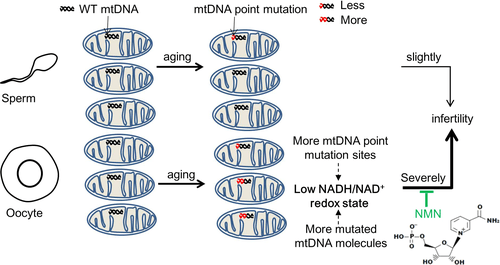
Scientists show that mtDNA mutation levels inversely correlate with fertility, interestingly mainly affecting not male but female fertility. mtDNA mutations decrease female mice's fertility by reducing ovarian primordial and mature follicles. Scientists showed the mtDNA mutation types in oocytes during age.
Mechanistically, accumulation of mtDNA mutations decreases fertility by impairing oocyte's NADH/NAD+ redox state, which could be rescued by nicotinamide mononucleotide treatment.
For the first time, scientists answer the fundamental question of the causal effect of age‐accumulated mtDNA mutations on fertility and its sex dependence, and show its distinct metabolic controlling mechanism.
In short, NMN is viewed as a promising therapy for age‐associated physiological dysfunction and disease. We found NMN also has potential as a drug for mtDNA mutation caused oocyte aging.
In summary, our study, by systematically comparing the quality and mtDNA mutations of oocytes in young and elder female patients, showed that mtDNA point mutations inversely correlate with oocyte quality, which provides another potential biomarker for embryo viability in assisted reproduction, and demonstrated NMN as a potential candidate drug for oocyte aging caused by mtDNA mutation.
Aging is one of the key factors in both male fertility and female fertility. Indeed, female (human) fertility normally peaks at age 24 and diminishes after 30, with pregnancy occurring rarely after 50.
Mitochondrial malfunction has been hypothesized to play important roles in age‐ and environment‐induced infertility. For instance, mitochondrial DNA (mtDNA) deletions were reported to accumulate in human ovarian aging and mtDNA mutations may cause male infertility due to loss of spermatocytes and spermatids.
As a result, assessment of mitochondrial function status, mtDNA content, and mtDNA integrity is often performed to investigate the quality of sperms and oocytes in assisted reproductive technologies.
In humans, female fertility begins to decrease after the age of 30 and decreases more rapidly after 37.
Based on this, scientists divided female patients undergoing in vitro fertilization (IVF) or intracytoplasmic sperm injection (ICSI) into young (≤30 years) and elder (≥38 years) groups, and investigated the impact of age on oocyte mtDNA mutations.
What they found was that elder female patients of age ≥38 years have lower blastocyst formation rate and more mtDNA point mutations in oocytes than young female patients of age ≤30 years.
Fertilization rates and good‐quality embryo (2PN) rates showed no significant differences between young and elder, but blastocyst formation rate of elder group was significantly lower than that of young group in both IVF and ICSI cycles. This finding is consistent with a previous study showing that blastocyst formation declined with age.
Collectively, their results indicate that elder female patients have defects in blastocyst formation correlated with an increased accumulation of oocyte mtDNA point mutations.
Fertility 1
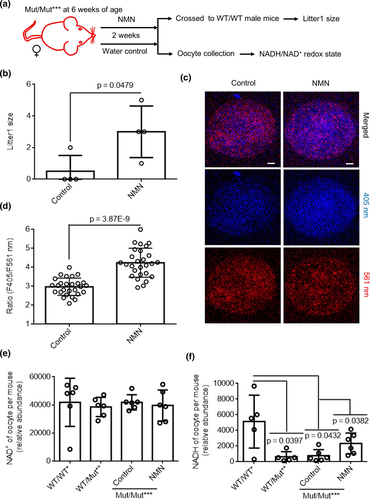
Accumulation of mtDNA mutations decrease female fertility by reducing oocyte's NADH/NAD+ redox state.
NADH/NAD+ has an important role in energy metabolism, and their redox state can be monitored in living cells using SoNar, a NADH/NAD+ sensor. These data indicate that oocytes have lower NADH/NAD+ redox ratio and weaker energy production.
Accumulation of mtDNA mutations decrease female fertility by reducing oocyte's NADH/NAD+ redox state. NMN was added to subjects water for 2 weeks.
As female fertility is affected by aging in addition to the above‐mentioned mtDNA mutations, they further detected oocyte's NADH/NAD+ redox ratio in young and elder mice. They found a significantly decreased NADH/NAD+ ratio in elder mice as compared to the young counterparts. These results thus established a link between female infertility and perturbed NADH/NAD+ redox state.
As it has been reported that NMN is a promising therapy for aging‐associated physiological dysfunction and diseases through rescuing NADH/NAD+ redox state, they tested whether NMN could increase fertility of mice with high levels of mtDNA mutations.
As shown in Figure, the first litter size of female treated with NMN was higher than that from female with water.
This result indicates that NMN is remarkably capable of ameliorating infertility in female mice.
For female mice treated with NMN and water it was observed that the ratios in oocytes of mice with NMN were higher than mice with water, demonstrating an enhancement of the NADH/NAD+ ratio by NMN treatment.
Respective quantification of NADH and NAD+ revealed an increase in the amount of NADH, but not of NAD+, in oocytes of treated with NMN.
NMN treatment was shown to induce mitophagy in stem cells, leading to removal of dysfunctional mitochondria and thus cell function recovery.
Interestingly, NMN failed to alter the motility and ATP levels of sperm in male mice. All these results indicate that NMN can rescue fertility of PolgA mutator mice with more point mutations by enhancing cellular NADH/NAD+ ratio in oocytes.
For the first time, we quantified the effect of aging on the accumulation of heteroplasmic mtDNA mutations in human individual oocytes using next‐generation sequencing (NGS).
Aging of the human female reproductive system is much faster than that of other body systems, and follicle number reduction and oocyte quality decay with oxidative damage during ovarian aging cause the gradual decline in female fertility.
Scientists showed the mtDNA mutation types in oocytes during age.
This study also showed that mtDNA point mutations inversely correlate with oocyte quality, which provides another potential biomarker for embryo viability in assisted reproduction. Indeed, mitochondrial transfer has been used to exchange and enhance the integrity, activity, and number of mitochondria in quality‐compromised oocytes, which was recently used to improve fertility in women with previous poor reproductive performance by autologous mitochondrial injection treatment. This work provides a biomarker for the clinical application.
Our results answer the fundamental question—which step of oogenesis is damaged by age‐related mtDNA mutations—and suggested follicles could be the potential therapy target for female infertility. For sperm aging, mtDNA mutations may cause male infertility due to loss of spermatocytes and spermatids which can be rescued by increasing total mtDNA copy number.
However, our results demonstrate that mtDNA mutations specially reduce sperm motility without significantly compromising the fertility of young male. The levels of mtDNA mutations in oocytes versus other cell types, and the levels of heteroplasmy in offspring are a worthy follow‐up study, thus being a limitation of our present study.
NAD+/NADH redox state is known to play essential roles in cell metabolism. They demonstrated that mtDNA mutations decrease female POLG mutator mice's fertility by impairing oocyte's NADH/NAD+ redox state.
Interestingly, NAD+ availability was recently shown to decrease with age. Hence, this study further emphasizes important roles of NADH/NAD+ redox state in oocyte aging. The perturbed NADH/NAD+ redox state may further compromise energy metabolism, as is observed for the oocytes of POLG mutator mice.
NMN, a key NAD+ intermediate, has been shown to enhance NAD+ biosynthesis, activate SIRT1, and improve metabolic and stress responses in aging mice as well as ameliorate various pathologies in mouse disease models.
Consistently, NMN treatment elevated the amount of NADH, the reduced form of NAD+, in oocytes of POLG mutator mice. The unchanged amount of NAD+ with the up‐regulation of NADH indicated that the overall size of NADH/NAD+ pool in oocytes was increased by NMN treatment.
Fertility 2
Thus, NMN can be considered as a potential agent in the treatment of cell metabolism disorders triggered by perturbed the overall of NADH/NAD+ pools.
NMN supplementation has been reported to reverse age‐related arterial, vascular, and skeletal muscle dysfunction in mice by mitochondrial‐related signaling. Indeed, it was shown to be transported into mammalian mitochondria.
The short‐term administration of NMN has been reported to have remarkable therapeutic effects on metabolic complications and other disease conditions.
In short, NMN is viewed as a promising therapy for age‐associated physiological dysfunction and disease. We found NMN also has potential as a drug for mtDNA mutation caused oocyte aging. Further mechanistic studies are required in future.
In summary, our study, by systematically comparing the quality and mtDNA mutations of oocytes in young and elder female patients, showed that mtDNA point mutations inversely correlate with oocyte quality, which provides another potential biomarker for embryo viability in assisted reproduction, and demonstrated NMN as a potential candidate drug for oocyte aging caused by mtDNA mutation.
Water consumption was measured for 2 weeks prior to the start of NMN administration. NMN was administered in drinking water at 900 mg/kg/day, based on the previously measured water consumption (Mills et al., 2016).
The administration began at 6 weeks of age and continued for 2 weeks. The NMN solution was prepared weekly in small batches by dissolving NMN into autoclaved water at the certain dose and filtering sterilely. Water bottles and cages were changed twice weekly.
In two recent studies we examine the effect of combining NMN and Melatonin on Ischemia Injury and Cognitive Impariment.
Ischemic heart diseases are the major reasons for disability and mortality in elderly individuals. In this study, we tried to examine the combined effects of nicotinamide mononucleotide (NMN) preconditioning and melatonin postconditioning on cardioprotection and mitochondrial function in ischemia/reperfusion (I/R) injury of aged male rats.
Sixty aged Wistar rats were randomly allocated to 5 groups, including
Isolated hearts were mounted on Langendorff apparatus and then underwent 30-minue ligation of left anterior descending coronary artery to induce regional ischemic insult, followed by 60 minutes of reperfusion.
Nicotinamide mononucleotide (100 mg/kg/d intraperitoneally) was administered for every other day for 28 days before I/R. Melatonin added to perfusion solution, 5 minutes prior to the reperfusion up to 15 minutes early reperfusion.
Myocardial hemodynamic and infarct size (IS) were measured, and the left ventricles samples were obtained to evaluate cardiac mitochondrial function and oxidative stress markers.
Melatonin postconditioning and NMN had significant cardioprotective effects in aged rats; they could improve hemodynamic parameters and reduce IS and lactate dehydrogenase release compared to those of control group.
Moreover, pretreatment with NMN increased the cardioprotection by melatonin.
All treatments reduced oxidative stress and mitochondrial reactive oxygen species (ROS) levels and improved mitochondrial membrane potential and restored NAD+/NADH ratio.
The effects of combined therapy on reduction of mitochondrial ROS and oxidative status and improvement of mitochondrial membrane potential were greater than those of alone treatments. Combination of melatonin and NMN can be a promising strategy to attenuate myocardial I/R damages in aged hearts.
Restoration of mitochondrial function may substantially contribute to this cardioprotection.
Given the fact that both melatonin and nicotinamide mononucleotide (NMN) act as pleiotropic agents (having multiple effects from a single gene) in various age-related cognitive disorders, we aimed to investigate the effect of these compounds separately and together on the cognitive outcomes, mitochondrial function, and apoptosis in aged rats.
Forty old and ten young (24 and 3 months old, respectively) male Wistar rats were randomly allocated into five groups:
Melatonin (10 mg/kg) and NMN (100 mg/kg) were administered, separately or in combination for 28 every other day in aged animals.
The Barnes maze and novel object recognition test were used to assess spatial and episodic-like memories, respectively. Also, apoptosis (form of programmed cell death, or “cellular suicide.”) and alterations in mitochondrial function including reactive oxygen species (ROS) and ATP levels as well as mitochondrial membrane potential were assessed in both prefrontal cortex (PFC) and hippocampus (HIP) regions.
Behavioral results revealed that NMN and melatonin separately or in combination, alleviate aging-induced memory impairment. Moreover, agents' co-administration declined mitochondrial dysfunction and apoptotic cell count both in PFC and HIP regions. The agents separately or in combination (more potent) could induce neuroprotective effect and improve learning and memory in aged animals.
https://pubmed.ncbi.nlm.nih.gov/31678348/
https://pubmed.ncbi.nlm.nih.gov/31645107/
There is increasing evidence showing that a decrease in NAD + availability with age plays a critical role in age-related neurovascular and cerebromicrovascular dysfunction. Our recent studies demonstrate that restoring cellular NAD+ levels in aged mice rescues neurovascular function, increases cerebral blood flow, and improves performance on cognitive tasks.
Understanding molecular mechanisms involved in vascular aging is essential to develop novel interventional strategies for treatment and prevention of age-related vascular pathologies.
Aging-induced structural and functional alterations of the neurovascular unit lead to impairment of neurovascular coupling responses, dysregulation of cerebral blood flow, and increased neuroinflammation, all of which contribute importantly to the pathogenesis of age-related vascular cognitive impairment (VCI).
Importantly, in aged mice, restoration of cellular NAD+ levels by treatment with the NAD+ booster nicotinamide mononucleotide (NMN) exerts significant vasoprotective effects, improving endothelium-dependent vasodilation, attenuating oxidative stress, and rescuing age-related changes in gene expression.
We refer to two recent studies, references below.
To determine the effects of restoring cellular NAD levels on neurovascular gene expression profiles, 24-month-old C57BL/6 mice were treated with nicotinamide mononucleotide (NMN), a key NAD+ intermediate, for 2 weeks.
Transcriptome analysis of preparations enriched for cells of the neurovascular unit was performed by RNA-seq. Neurovascular gene expression signatures in NMN-treated aged mice were compared with those in untreated young and aged control mice. We identified 590 genes differentially expressed in the aged neurovascular unit, 204 of which are restored toward youthful expression levels by NMN treatment.
The transcriptional footprint of NMN treatment indicates that increased NAD+ levels promote SIRT1 activation in the neurovascular unit, as demonstrated by analysis of upstream regulators of differentially expressed genes as well as analysis of the expression of known SIRT1dependent genes.
Pathway analysis predicts that neurovascular protective effects of NMN are mediated by the induction of genes involved in mitochondrial rejuvenation, anti-inflammatory, and anti-apoptotic pathways.
In conclusion, the recently demonstrated protective effects of NMN treatment on neurovascular function can be attributed to multifaceted sirtuin-mediated anti-aging changes in the neurovascular transcriptome.
Our present findings taken together with the results of recent studies using mitochondria-targeted interventions suggest that mitochondrial rejuvenation is a critical mechanism to restore neurovascular health and improve cerebral blood flow in aging.
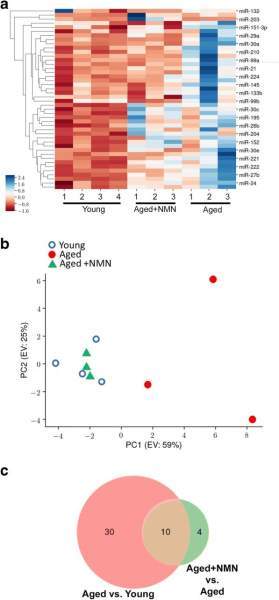
Strong experimental evidence shows that dysregulation of microRNAs (miRNAs) has a role in vascular aging. The present study was designed to test the hypothesis that age-related NAD+ depletion is causally linked to dysregulation of vascular miRNA expression. A corollary hypothesis is that functional vascular rejuvenation in NMN-treated aged mice is also associated with restoration of a youthful vascular miRNA expression profile.
To test these hypotheses, aged (24-month-old) mice were treated with NMN for 2 weeks and miRNA signatures in the aortas were compared to those in aortas obtained from untreated young and aged control mice. We found that protective effects of NMN treatment on vascular function are associated with antiaging changes in the miRNA expression profile in the aged mouse aorta. The predicted regulatory effects of NMN induced differentially expressed miRNAs in aged vessels include anti-atherogenic (atherogenic means formation of fatty deposits in the arteries) effects and epigenetic rejuvenation.
Nmn Supplementation Aging 2019
Future studies will uncover the mechanistic role of miRNA gene expression regulatory networks in the antiaging effects of NAD+ booster treatments and determine the links between miRNAs regulated by NMN and sirtuin activators and miRNAs known to act in the conserved pathways of aging and major aging-related vascular diseases.
References:-
https://pubmed.ncbi.nlm.nih.gov/32056076/
https://www.ncbi.nlm.nih.gov/pmc/articles/PMC6815288/pdf/11357_2019_Article_95.pdf