Increasing production of SIRT6 extends lifespan by about 20%, improves physical activity, and mitigates frailty in old age.
Published by By Brett J. Weiss 8 June 2021.
Highlights
· Mice genetically modified to overproduce SIRT6 protein see drastic increases in lifespan and physical performance.
· SIRT6 improves liver cell energy and glucose sugar production for improved physical activity, healthspan, and survival.
The rising aging global population, referred to as the “Silver Wave,” presents health-related challenges that include age-related diseases and frailty – a condition characterized by fatigue and weakness. Research shows that diet and metabolism are key regulators of lifespan, representing targetable intervention strategies to promote healthy aging. Scientists have uncovered that a protein called SIRT6 regulates aging, obesity, and insulin sensitivity, but how it does so needs further clarification to improve our attempts to maintain and preserve health during aging.
Cohen and colleagues from Bar-Ilan University in Israel published a study in Nature Communications showing that driving SIRT6 protein production extends mouse lifespan by about 20%. They also show that enhancing SIRT6 production through genetic manipulation in older ages optimizes the energy production balance (homeostasis) of liver and fat tissues to delay frailty and extend life without disease (healthspan).
“This discovery, combined with our previous findings, shows that SIRT6 controls the rate of healthy aging,” said Professor Cohen in a press release. “If we can determine how to activate it in humans, we will be able to prolong life, and this could have enormous health and economic implications.”
Sirtuins are proteins that require the essential, life-sustaining molecule called nicotinamide adenine dinucleotide (NAD+) to perform their function. When sirtuins have enough NAD+ to work properly, they play crucial roles in maintaining DNA health and cell metabolism. Two of the seven sirtuins, SIRT1 and SIRT6, have been suspected of regulating metabolism and aging processes, leading Cohen and colleagues to tease out which of these two sirtuins is most important during aging or whether they act synergistically.
To explore the interaction between SIRT1 and SIRT6 in aging and lifespan, the Israel-based research team genetically modified mice to produce more SIRT1 (SIRT1 transgenic mice), more SIRT6 (SIRT6 transgenic mice), or both (SIRT1 + SIRT6 transgenic mice). They followed the groups of mice for up to 40 months to compare their lifespans. They found that the male and female SIRT6 transgenic mice lived, on average, about 27% and 15% longer than non-modified mice and SIRT1 transgenic mice, respectively. There was no significant difference in lifespan between SIRT6 transgenic and SIRT1 + SIRT6 transgenic mice, so Cohen and colleagues concluded the two proteins don’t synergistically extend lifespan but that SIRT 6 overproduction does so on its own.

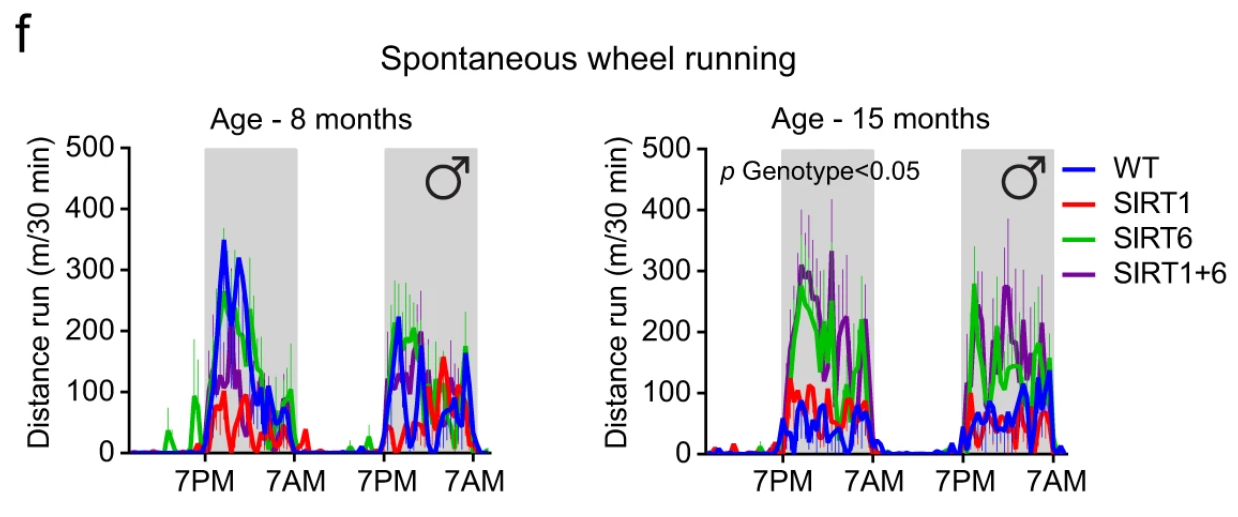
To see if the increased SIRT6 protein levels provide healthspan benefits, Cohen and colleagues compared the distances that the three groups of older transgenic mice ran on a spinning wheel, which is indicative of physical performance. Greater distances run indicate reduced frailty since fatigued and tired older mice prefer to remain stationary. The research group found that older, 15-month-old SIRT6 and SIRT1 + SIRT6 but not SIRT1 transgenic mice ran greater distances during nighttime hours, when mice are most active. Because increased SIRT6 protein levels were present in the mouse groups running longer distances but elevated SIRT1 levels alone didn’t yield these results, Cohen and colleagues determined higher SIRT6 levels drive the reduced frailty in older-aged mice.
After determining that increasing SIRT6 protein levels substantially extends mouse health and lifespan, Cohen and colleagues wanted to figure out what physiological mechanisms explain these benefits. By measuring the activity of genes and protein levels involved in energy production, Cohen and colleagues found that SIRT6 preserves metabolism pathways that use NAD+ in old age. Their research indicates that metabolic pathways in the liver producing energy (ATP) along with the sugar glucose deteriorate during aging, leading to perturbed energy homeostasis. Increasing SIRT6 levels in the liver as mice get older enhances energy production and preserves ATP levels along with glucose for brain function.
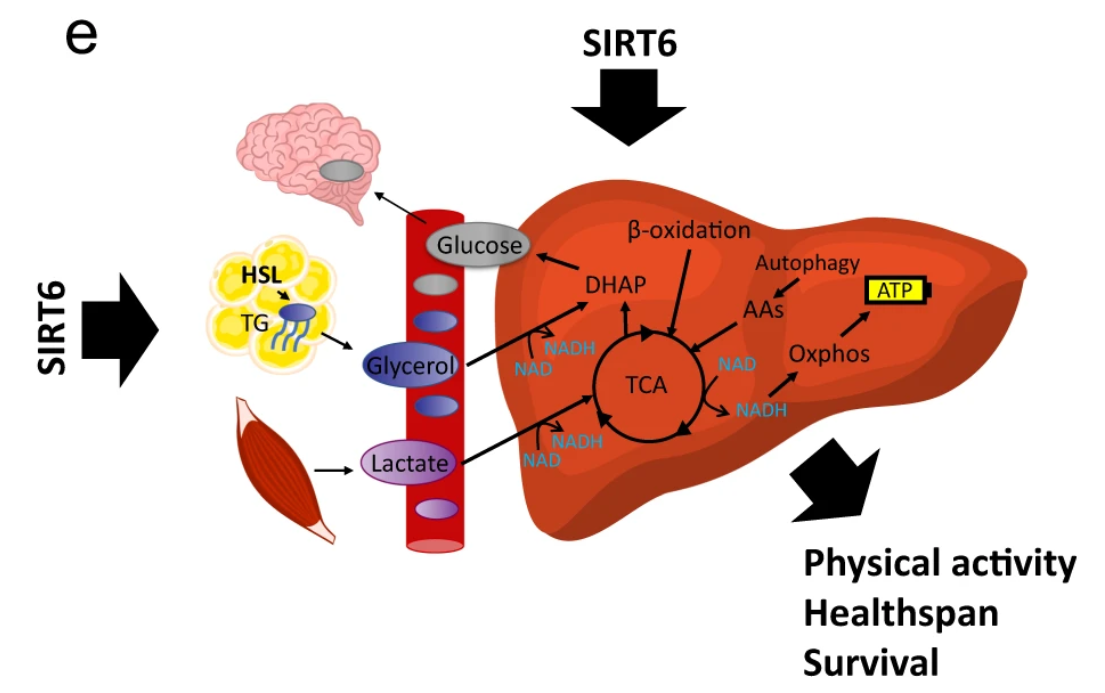
By significantly increasing cell energy and glucose production, SIRT6 stimulates the physiological response that is identical to intermittent fasting, a reduced-calorie diet that increases longevity. Cohen’s laboratory is currently trying to devise ways to extend healthy life based on these findings.
For the first time, a clinical study in older men shows that taking NMN increases blood NAD+ levels and improves various indicators of muscle strength and performance.
This is an article published on https://www.nmn.com/news/12-weeks-of-nmn-supplementation-improves-muscle-function. By Brett J. Weiss 18 June 2021.
Highlights
NMN raises blood NAD+ and NAD+ metabolite levels in men over 65.
Supplementing with 250 mg of NMN for 12-weeks enhances muscle function and mobility.
Animal studies have shown that administering the precursor molecule nicotinamide mononucleotide (NMN) elevates nicotinamide adenine dinucleotide (NAD+) levels. Interestingly, age-related NAD+ level reductions have been linked to cardiovascular, neurodegenerative, and metabolic diseases along with reduced muscle function, which NMN supplementation ameliorates – at least in rodents. So, how can we figure out whether NMN supplementation helps with these age-related conditions in humans?
Yamauchi and colleagues from the University of Tokyo released a non-peer reviewed journal article in Research Square showing that orally treating men over age 65 with 250 mg per day of NMN significantly increased their NAD+ levels and improved their muscle performance. Specifically, supplementing with NMN increased the number of times they rose from a chair in 30 seconds, enhanced walking speed, and improved grip strength. Findings from the study add more evidence that NMN’s healthy aging benefits seen in animals like rodents translate to humans.
“We report that supplementation of 250 mg/d NMN for 12 weeks in healthy old men was safe, well tolerated, and significantly increased NAD+ and NAD+ metabolites in whole blood,” said Yamauchi and colleagues. “Additionally, NMN induced improvements in muscle strength and performance. Thus, chronic oral administration of NMN could be an effective strategy for the prevention of age-related muscle disorders.”
12 week nmn human trial muscle 1
Taking NMN for 12-weeks is Well-Tolerated
Before Yamauchi and colleagues tested how effective NMN is at improving muscle function in aged men, the research team wanted to know whether taking it is safe. The research team looked at common blood chemistry measurements indicative of toxicity that included liver enzymes and markers of kidney function after 12 weeks of daily NMN usage. Importantly, the lab results were unaltered in the group of men who took NMN compared to those that did not, indicating that taking NMN is well-tolerated.
Oral NMN Increases NAD+ Levels in People
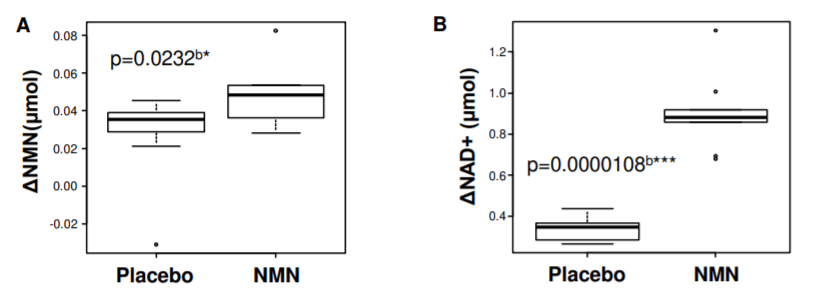
Since previous research has shown that NMN supplementation increases blood NAD+ levels in aged rodents and that these higher NAD+ levels correlate with improved disease conditions, Yamauchi and colleagues tested whether NMN supplementation increases NAD+ in aged men. They found that the 12-week NMN supplementation substantially increased blood NAD+ levels, providing the first results from any study showing that NMN increases blood NAD+ in humans.
“This is the first study to report that NMN administration significantly increased NAD+ and NAD+ metabolites in the whole blood,” said Yamauchi and colleagues.
Further analyses demonstrated that NMN supplementation improves NAD+ metabolism by promoting NMN’s conversion to NAD+ and the conversion of other NMN metabolites to NAD+ through a separate NAD+ synthesis pathway (the de novo pathway). These findings open up the possibility that NMN drives NAD+ production by activating more than one NAD+ biosynthesis pathway.
(Igarashi et al., 2021 | Research Square)
Taking NMN substantially increases blood NMN and NAD+ levels. Following 12 weeks of daily NMN supplementation, blood NMN levels were significantly higher (A), and NAD+ levels were substantially higher (B). These findings are the first to show that long-term NMN administration increases blood NAD+ levels in people.
NMN Enhances Muscle Performance in Men Age 65 and Older
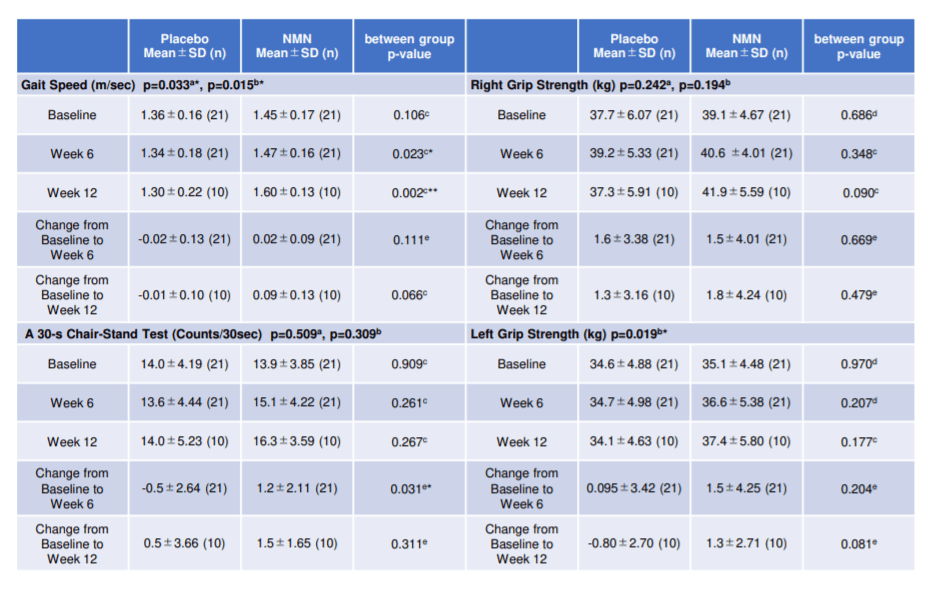
To find out whether these NMN-induced NAD+ level elevations drive improved physical function, Yamauchi and colleagues tested muscle strength and performance. They found that NMN significantly improved several indicators of muscle strength and performance: walking speed, grip strength, and the number of times the participants could stand up from a chair in 30 seconds. Their results demonstrate that oral NMN supplementation for 12 weeks improves muscle strength and performance in healthy, older men.
12 week nmn human trial muscle 2
(Igarashi et al., 2021 | Research Square)
Taking NMN daily for 12 weeks significantly improves walking speed, grip strength, and the number of times rising from a chair in 30 seconds. Walking speed (gait speed) in meters per second substantially increased as shown in the upper left quadrant. The lower left quadrant shows that the number of times rising from a chair in 30 seconds (a 30-second chair-stand test) increased significantly after six weeks with NMN supplementation. Left hand grip strength shown in the lower right quadrant also increased significantly with NMN supplementation. These findings indicate that NMN improves muscle motility and function.
“We reported that the chronic oral supplementation of 250 mg NMN per day is safe and a well-tolerated and effective strategy for boosting NAD+ metabolism in healthy elderly men,” stated Yamauchi and colleagues. “Additionally, our exploratory analyses of the effects of NMN supplementation on physiological functions suggest the ability of NMN to improve muscle strength, which is an important clinical indicator of aging.”
How Does NMN Improve Muscle Function?
Although these findings point to long-term NMN supplementation promoting overall muscle health, there’s no evidence as to how this all works. What’s more, the study was performed in a small group of healthy older men. To be more certain of the main conclusions that NMN can boost NAD+ levels and improve muscle strength and performance in people, these studies need to be replicated in a larger group of adults that also includes women. Nevertheless, this is a step in the right direction for NMN to be considered a clinically proven anti-aging agent, as this study is a promising indicator that some of the anti-aging effects of NMN seen in rodents may extend to humans.
What’s more, the 250 mg per day dosage used has been applied in another study showing that NMN improves muscle insulin sensitivity in older women. So, 250 mg per day may give an effective dose in older people, but a study in Japanese men showed that up to 500 mg is well-tolerated. The question, therefore, remains as to whether further benefits could be seen with higher doses that are safely tolerated.
https://www.sciencedirect.com/science/article/pii/S221323172030094X
Published: July 2020
Age-related macular degeneration (AMD) is the leading cause of blindness among the elderly. Currently, there are no treatments for dry AMD, which is characterized by the death of retinal pigment epithelium (RPE) and photoreceptors.
Reports from human donors with AMD suggest that RPE mitochondrial defects are a key event in AMD pathology. Thus, the most effective strategy for treating dry AMD is to identify compounds that enhance mitochondrial function and subsequently, preserve the RPE.
In this study, primary cultures of RPE from human donors with (n = 20) or without (n = 8) AMD were used to evaluate compounds that are designed to
Mitochondrial function measured after drug treatments showed an AMDdependent response; only RPE from donors with AMD showed improvements.
All four drugs caused a significant increase in maximal respiration (p < 0.05) compared to untreated controls. Treatment with Rapamycin, PQQ, or NMN significantly increased ATP production (p < 0.05). Only Rapamycin increased basal respiration (p < 0.05).
Notably, robust responses were observed in only about 50% of AMD donors, with attenuated responses observed in the remaining AMD donors.
Further, within the responders, individual donors exhibited a distinct reaction to each drug.
Our results suggest drugs targeting pathways involved in maintaining healthy mitochondria can improve mitochondrial function in a select population of RPE from AMD donors.
The unique response of individual donors to specific drugs supports the need for personalized medicine when treating AMD.
https://pubmed.ncbi.nlm.nih.gov/32380185/
Published: July 2020
Hypoglycemia-induced brain injury is a potential complication of insulin therapy in diabetic patients. Severe hypoglycemia triggers a cascade of events in vulnerable neurons that may lead to neuronal death and cognitive impairment even after glucose normalization. Oxidative stress and the activation of poly (ADP-ribose) polymerase-1 (PARP-1) are key events in this cascade.
The production of reactive oxygen species (ROS) induces DNA damage and the consequent PARP-1 activation, which depletes NAD+ and ATP, resulting in brain injury. One of the key precursors of NAD+ is nicotinamide mononucleotide (NMN), which is converted to NAD+ and reduces production of ROS. Here we investigated whether NMN could reduce brain injury after severe hypoglycemia.
We used a rat model of insulin-induced severe hypoglycemia and injected NMN (500 mmg/kg, i.p., one week) following 30 min of severe hypoglycemia, at the time of glucose administration. One week after severe hypoglycemia, hippocampal long-term potentiation (LTP), an electrophysiogic assay of synaptic plasticity, was examined and neuronal damage was assessed by Hematoxylin-Eosin staining. ROS accumulation, PARP-1 activation, NAD+ and ATP levels in hippocampus were also measured.
Cognitive function was assessed using the Morris water maze 6 weeks after severe hypoglycemia. The addition of NMN reduced neuron death by 83 ± 3% (P < 0.05) after severe hypoglycemia. The hippocampal LTP was significantly reduced by severe hypoglycemia but showed recovery in the NMN addition group. NMN treatment also attenuated the severe hypoglycemia-induced spatial learning and memory impairment.
Mechanically, we showed that NMN administration decreased ROS accumulation, suppressed PARP-1 activation, and restored levels of NAD+ and ATP in hippocampus. All these protective effects were reversed by 3-acetylpyridine (3-AP), which generates inactive NAD+.
In summary, NMN administration following severe hypoglycemia could ameliorate neuronal damage and cognitive impairment caused by severe hypoglycemia. These results suggest that NMN may be a promising therapeutic drug to prevent hypoglycemia-induced brain injury.
Abstract
Nicotinamide adenine dinucleotide (NAD), the cell’s hydrogen carrier for redox enzymes, is well known for its role in redox reactions. More recently, it has emerged as a signalling molecule. By modulating NAD+-sensing enzymes, NAD+ controls hundreds of key processes from energy metabolism to cell survival, rising and falling depending on food intake, exercise, and the time of day.
NAD+ levels steadily decline with age, resulting in altered metabolism and increased disease susceptibility. Restoration of NAD+ levels in old or diseased animals can promote health and extend lifespan, prompting a search for safe and efficacious NAD-boosting molecules that hold the promise of increasing the body’s resilience, not just to one disease, but to many, thereby extending healthy human lifespan
Background
Nicotinamide adenine dinucleotide (NAD) is one of the most important and interesting molecules in the body. It is required for over 500 enzymatic reactions and plays key roles in the regulation of almost all major biological processes. Above all, it may allow us to lead healthier and longer lives.
NAD+ is one of the most abundant molecules in the human body, required for approximately 500 different enzymatic reactions and present at about three grams in the average person. Though it was once considered a relatively stable molecule, NAD+ is now known to be in a constant state of synthesis, degradation, and recycling, not only in the cytoplasm where most research is focused, but also within major organelles including the nucleus, Golgi, and peroxisomes.
With the exception of neurons, mammalian cells cannot import NAD+, so they must synthesize it either de novo by the kynure- nine pathway from tryptophan or forms of vitamin B3 such as nicotinamide (NAM) or nicotinic acid (NA) (Figure 1).
To maintain NAD+ levels, most NAD+ is recycled via salvage pathways rather than generated de novo. The majority of NAD+ is salvaged from NAM, the product of CD38 and the PARPs or from the various forms of niacin taken up in the diet, including NAM, NA, nicotinamide riboside (NR), and nicotinamide mononucleotide (NMN).
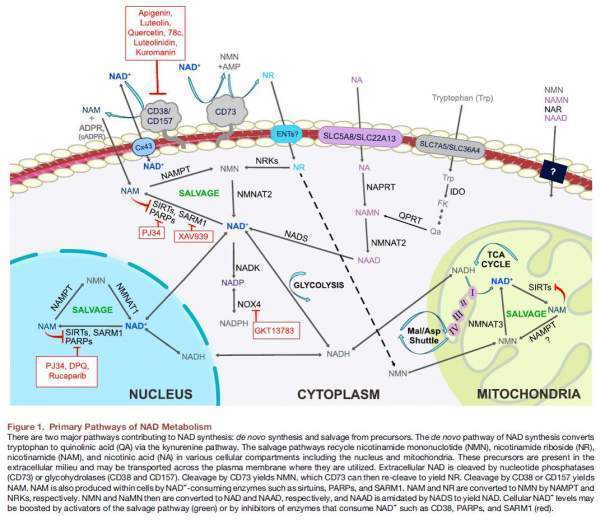
NAD+-Responsive Signalling Pathways
In mammals, the two main NAD+-responsive signalling protein families are the sirtuins and the PARP.
Sirtuins regulate a wide variety of mammalian proteins involved in processes that include mitochondrial metabolism, inflammation, meiosis, autophagy, circadian rhythms, and apoptosis.
PARPs are required for numerous cellular processes, including DNA repair and transcriptional regulation hyperactivation in response to DNA damage, causing depleting the cell of NAD+, most critically in the mitochondria, and thereby inducing apoptosis
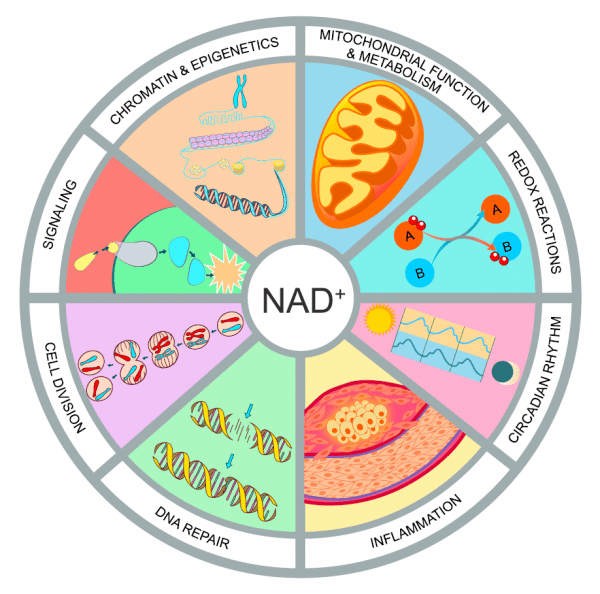
Figure 2. Hallmarks of NAD Homeostasis
NAD+ is not merely a redox co-factor, it is also a key signalling molecule that controls cell function and survival in response to environmental changes such as nutrient intake and cellular damage.
Fluctuations in NAD impact mitochondrial function and metabolism, redox reactions, circadian rhythm, immune response and inflammation, DNA repair, cell division, protein-protein signalling, chromatin, and epigenetics.
NAD+ Precursors
It is now known that NAD+ levels decline with age and that raising levels back up to or even above baseline provides a surprising number of health benefits in a wide range of organisms, from yeast to rodents. The first evidence that NAD+ boosting could increase lifespan came from studies our laboratory performed in yeast cells over 15 years ago.
In Drosophila, overexpression of the Pnc1 homolog D-NAAM extends mean lifespan by 30%, indicating that the upregulation of NAD synthesis might be a conserved longevity mechanism. (Conserved means similarity among different organisms and species).
NR and NMN are soluble and orally bioavailable endogenous molecules, making them the molecules of choice for animal experiments and human clinical trials.
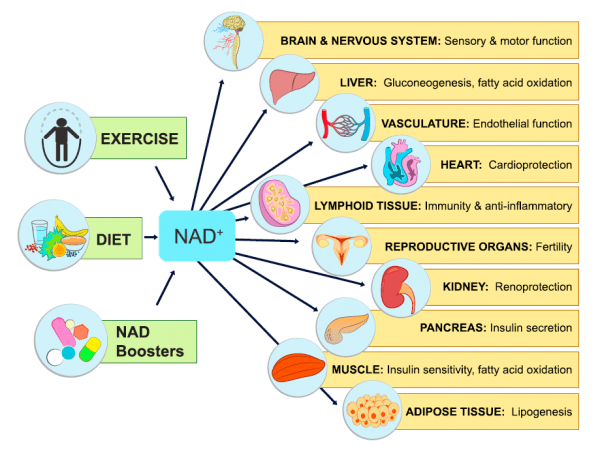
Figure 3. Physiological Effects of NAD Boosting Molecules
NAD+ levels steadily fall as we age, leading to a decline in the function of cells and organs. By raising NAD
NAD+ boosters can have profound effects on the health and survival of mammals.
Increases in NAD, NAD+ promote cognitive and sensory function, gluconeogenesis in liver, lipogenesis in adipose tissue, insulin secretion in pancreas, and insulin sensitivity in muscle. NAD also promotes endothelial cell proliferation and protects against cardio and cerebrovascular disease.
NAD regulates immune function and inflammation and protects against acute injury in kidney. NAD promotes and extends fertility in both males and females, ostensibly by activation of sirtuins.
Effects of NAD Boosters on Physiology and Health in Mouse Models
The initial discovery that genetically upregulating NAD+ biosynthesis can increase the stress resistance and lifespan of yeast cells and Drosophila prompted investigation of NAD+ boosters in rodents, both wild type and disease models, often with dramatic effects (Figure 3).
Liver Function
Key enzymes in NAD+ signalling pathways are known to protect the liver from fat accumulation, fibrosis, and insulin resistance, which are related to the development of fatty liver diseases, such as NAFLD and NASH.
SIRT1 and its downstream targets PGC-1a, PSK9, and SREBP1 maintain mitochondrial function cholesterol transport, and fatty acid homeostasis SIRT2 controls gluconeo- genesis by deacetylating phosphoenol- pyruvatecarboxykinase; SIRT3 regulates OXPHOS, fatty acid oxidation, ketogenesis, and defense against oxidative stress; and SIRT6 controls gluconeogenesis.
(NAFLD means Non-alcoholic fatty liver disease & NASH stands for Non-Alcoholic SteatoHepatitis)
Given the critical nature of these pathways in the liver, the maintenance of NAD+ levels is imperative for optimal organ function. As a result of obesity and aging, levels of NAMPT decline and CD38 levels increase, leading to a 2-fold decrease in steady-state NAD+ levels by mid-age.
Raising NAD+ levels back to those of young or lean mice has been particularly effective at preventing and treating obesity, alcoholic steatohepatitis, and NASH, while improving glucose homeostasis and mitochondrial dysfunction.
NAD+ boosting appears to not only improve the health of the liver, but also increase its capacity for regeneration and protect it against hepatotoxicity.
Kidney Function
Several lines of evidence indicate that reduced levels of NAD+ in aged kidneys and a corresponding decrease in sirtuin activity are largely responsible for reduced kidney function and resilience with age.
Consistent with this, activation of SIRT1 and SIRT3 by NAD+ supplementation protects against high-glucose-induced kidney mesangial cell hypertrophy.
Skeletal Muscle Function
Old mice have increased markers of muscle atrophy and inflammation as well as impaired insulin signalling and insulin-stimulated glucose uptake compared to young wild-type mice.
Treatment of old mice with NAD+ precursors, such as NR and NMN, dramatically improves muscle function.
Cardiac Function
NAD+ levels are critical for normal heart function and recovery from injury. Of all the NAD+-dependent signalling proteins, SIRT3 seems to be the most important in this context.
SIRT3 knockout mice develop fibrosis and cardiac hypertrophy as early as 13 months of age, which is further exacerbated by the loss of SIRT3 in aged and hypertrophic hearts, a decline that can be reversed by treatment with NMN.
NMN treatment either 30 min before ischemia (500 mg/kg, i.p.) or repetitive administration just before and during reperfusion provides marked protection against pressure overload and ischemia-reperfusion injury, reducing infarct size by as much as 44%.
Treatment with NAD+ precursors also improves heart function in old MDX mice with cardiomyopathy, improves mitochondrial and cardiac function in a mouse model for iron deficiency-induced heart failure, and restores cardiac function to near-normal levels in a mouse mode of Friedreich’s ataxia (FRDA) cardiomyopathy.
Endothelial and Vascular Function
Cardiovascular and cerebrovascular diseases contribute to the greatest decline in quality of life after 65 and are directly responsible for about one-third of all deaths.
Treatment of old mice with NMN (300 mg/kg/day for 8 weeks) restores carotid artery endothelium-dependent dilation, a measure of endothelial function, while reducing aortic pulse wave velocity and elastic artery stiffness
The performance of most organs and tissues is critically dependent on an abundant, fully functional microcapillary network that maintains a supply of oxygen, exchanges heat and various nutrients, and removes the waste products of metabolism.
Yet one of the most profound changes to the body as it ages is a decline in the number and function of endothelial cells that line the vasculature. Treatment of mice with NMN (500 mg/kg/day in water for 28 days) improves bloodflow and increases endurance in elderly mice by promoting SIRT1-dependent increases in capillary density.
Thus repleting NAD+ levels in the vascular endothelium is an attractive approach to increasing mobility in the elderly and treating conditions exacerbated by decreased blood flow, such as ischemia-reperfusion injury, slow wound healing, liver dysfunction, and muscle myopathies.
DNA Repair and Cancer
Because NAD+ is involved in so many aspects of cancer biology, from mitochondrial activity to cell survival, there are a variety of ways it could be used in the clinic. The rationale for reducing NAD+ levels in tumors is that they will be less able to repair DNA damage, thereby increasing their sensitivity to chemothera- peutic agents.
The other approach to treating cancer has been to increase NAD+ levels, the rationale being that an excess of NAD+ will boost mitochondrial respiration and downregulate glycolysis, counteracting the Warburg metabolism that cancer cells prefer. Increased NAD+ would also boost the activity of SIRT1 and SIRT6, both of which can inhibit tumors by down-regulating b catenin signalling and glycolysis. Long-term studies of wild-type mice, however, failed to provide any evidence of increased tumor size or number.
Interestingly, overexpression of NMNAT3 raises mitochondrial NAD+ and inhibits the growth of glioblastoma cells, and supplementation with NA or NAM inhibits tumor growth and multi-organ metastasis in SCID mice.
Immunity and Inflammation
There is a growing body of evidence that NAD+ precursors can have anti-inflammatory effects.
Treatment of 24-month-old mice with NMN for 1 week reduced the expression of inflammation markers such as TNF-a and IL-6 in skeletal muscle. Similarly, NR significantly reduced inflammation in a mouse model of ataxia telangiectasia (AT) autoimmunity.
NAM has been effective in the treatment of various inflammatory skin conditions, reduces the area of infiltration and demyelination in experimental autoimmune encephalomyelitis mouse models, and prevents photo-immunosuppression and photo-carcinogenesis.
Neuronal Function
The neuroprotective effects of NAD+ precursors were first revealed by a study of middle cerebral artery-induced ischemia, where treatment with NAM reduced the extent of infarct in Wistar rats, a finding recently replicated by treatment with NMN.
Numerous studies have reinforced the view that NAD+ levels are key to neuronal function and survival.
NMN preserves hippocampus-dependent spatial memory after forebrain ischemia and reduces edema, oxidative stress, inflammation, and neuronal death in a mouse collagenase-induced intracerebral hemorrhage model.
In addition to protecting damaged neurons, NAD+ precursors have shown promise in delaying the effects of several neurode-generative diseases.
In models of Alzheimer’s disease (AD), NR and NMN treatments improve cognition and synaptic plasticity in mice and rats.
Both NR and NMN improve motor function and memory in worm and mouse models of AT (ataxia telangiectasia).
NAD-boosting regimens prevent and in some cases can reverse neuronal degeneration associated with hearing loss, prion toxicity, retinal damage, traumatic brain injury (TBI), and peripheral neuropathy.
Aging and Longevity
Total NAD+ levels were once considered extremely stable. Recently, however, it has become clear that a steady decline in total NAD+ levels over time is a natural part of life for all species, from yeast to humans.
This decline, along with the decreased activity of NAD+ signalling proteins, is believed to be one of the major reasons organisms, including humans, age.
Given that budding yeast were first shown to live longer when the salvage pathway was upregulated, it was only appropriate that NAD+ precursors were first shown to extend lifespan in this species. In mice, raising NAD+ levels has been effective in delaying progeroid (accelerated aging) phenotypes and extending life-span in various models. In the case of the BubR1 mouse, median lifespan was extended by 58% percent and maximum by 21%,
Treatment of old (20-month-old) mice with NR extended their lifespan by nearly 5%, even when started at an age where few treatments work well, with the exception of rapamycin. Increased lifespan was also associated with a variety of physiological benefits including improved mitochondrial function and preservation of stem cell function.
Though NMN or other NAD+ boosters have not yet been tested for their effects on murine lifespan, some mice have been dosed for long periods. For example, starting at 5 months, NMN was administered to mice for over a year. Treated mice had increased activity, improved insulin sensitivity and lipid profiles, improved vision, and greater bone density. Taken together, these results, along with the various health benefits and age-reversal activities listed above, support the possibility of using NAD+ boosters as therapeutics against a broad range of age-associated diseases and possibly as a way to delay aging and age-related physical decline.
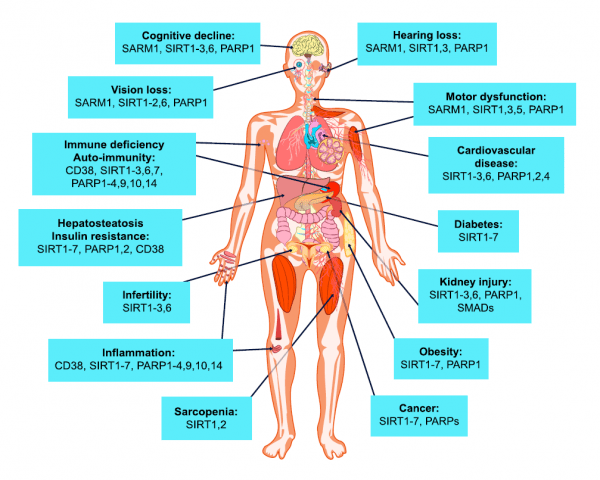
Figure 4. Potential Impact of NAD+ Boosters on Human Health via NAD+ Signaling Pathways
A decline in NAD+ during aging is believed to be a major cause of disease and disability, such as hearing and vision loss, as well as cognitive and motor dysfunction, immune deficiencies, autoimmunity, and dysregulation of the inflammatory response leading to arthritis, metabolic dysfunction, and cardiovascular disease.
In mouse models, NAD+ boosters prevent or treat a variety of different diseases, prompting a search for NAD+ boosters that are safe and effective as drugs to treat both rare and common diseases and, potentially, aging itself.
Perspective
Given that NAD was discovered over 100 years ago, it is surprising how little we know about its biology, pharmacology, and role in human disease. Though there is much to learn, we know this much: NAD+ boosters seem relatively safe and have a remarkable ability to prevent and treat diseases.
To read the study in full: https://www.ncbi.nlm.nih.gov/pmc/articles/PMC6342515/
Luis Rajman, Karolina Chwalek, and David A. Sinclair
Published: February 2018
https://www.sciencedirect.com/science/article/pii/S1319562X19303237
Published: December 2019
The study aims at discussing the effect of nicotinamide mononucleotides on protecting hemorrhagic transformation of cerebral infarction in the middle cerebral artery occlusion (MCAO) model.
Male mice aged 4–5 weeks and weighing about 22–35 g in Shanghai Ninth People’s Hospital are divided into three groups: sham group, collagenase intracerebral hemorrhage model (cICH + Vehicle) group and collagenase nicotinamide mononucleotide (cICH + NMN) group.
Then, the intervention therapy research is carried out. After 24 h, the neurological function, brain edema, hematoma volume, body weight, hemorrhage volume, RNA expression level, apoptosis, inflammatory factors and reactive oxygen species (ROS) content in surrounding tissues of mice are analyzed comprehensively.
Compared with the other two groups, nicotinamide mononucleotides in MCAO model have significant effects on improving neurological function, brain edema, inflammatory factors, body weight and cell apoptosis in mice, but have no significant effect on hemorrhage volume and hematoma volume in mice.
Nicotinamide mononucleotides can significantly improve the collagenase-induced intracerebral hemorrhage (ICH) model in mice under MCAO model, and they can protect the brain tissue of mice from RNA level to tissue cell level or mouse body weight and volume level.